The Science Behind Grout Admixtures: How It Change How Well Grout Works
13 February 2026When you see a beautiful tiled surface, you undoubtedly admire the tiles themselves—their colour, pattern, and how they are arranged, with grout holding it together. But Grout Admixture can make the grout much better and giving it added performance factors that extends the life of your tile and stone surface.
Grout admixtures are specific chemicals that are added to regular cementitious grout mixes significantly changing how it works. Grout admixtures are one of the most important new things in grout technology
Improving Bonding Strength with Admixtures
Grout admixtures make grout bond better to both the tile and the substrate, which makes it bond better. Instead than just relying on the natural interlocking of cement particles, the admixture makes a flexible, supporting network that helps the grout bond to surfaces better. This stronger bond spreads stress more evenly over the joint, which lowers the risk of early failure and helps the tiled surface stay intact as people walk on it and put things on it every day.
Admixtures help make a denser, more continuous bond by making it easier for the grout to get into the grout’s micro-texture and filling in the gaps in the grout itself. This extra strength not only makes the initial adhesion stronger, but it also reduces weak spots that could turn into cracks over time. The end product is a tiled surface that is stronger and lasts longer. It stays stable and looks better than grout mixed with water alone.
The Elastomeric Advantage: Flexibility
Grout admixtures make grout much more flexible. They change a material that is naturally hard and brittle into one that can accommodate movements without cracking. When the surface expands, shrinks, or vibrates, regular cement grout tends to break. But grout mixed with admixture creates a flexible network in the mix. This network lets the grout bend a little while it's under stress, so it can handle minor changes in the substrate, such as temperature variations, structural settling, or normal foot activity, without losing its strength.
This extra flexibility also provides a protective layer over time. The polymer-rich structure helps stop and slow down the propagation of microscopic cracks, which keeps the grout joints stable and undamaged instead of allowing them expand into obvious flaws. Because of this, tiled surfaces last longer, break less often, and need less upkeep. The installation will last a lot longer because the grout may flow with the surface instead of breaking against it.
A Hydrophobic Shield
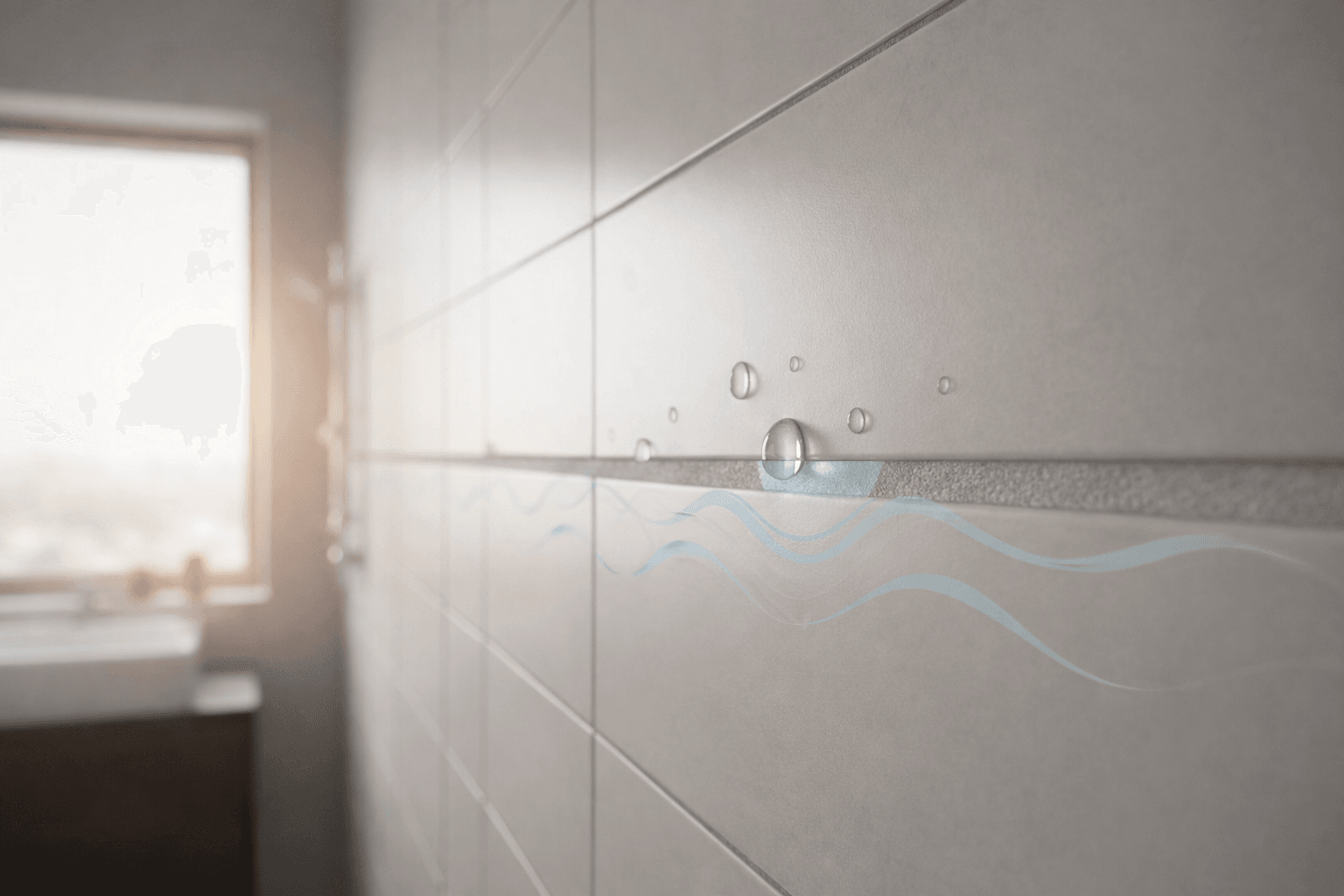
Grout admixtures assist to keep tiled surfaces safe by making the grout water-resistant. Water damage is one of the main reasons of grout and adhesive deterioration. The admixture makes the grout less porous and denser, which means less moisture can get in. This makes it difficult for water to get through the joints, which helps keep problems like staining, salt deposits, and moisture-related weakness from happening over time. These are problems that often decrease the life of tiled installations.
Grout mixed with an admixture can endure daily use in wet and outside areas much better because it doesn't allow moisture to penetrate the grout. Because there is less chance of moisture getting trapped in the joints, the grout is less likely to change colour, crack from freeze-thaw cycles, or promote mould growth. In the end, the surface will have tiles that last longer, look cleaner, are stronger, and need less upkeep.
The Synergistic Effect: More Than Just Parts
Grout admixtures are especially interesting since their benefits aren't separate; they interact together to form a material system. Its flexibility lowers stress concentrations that would otherwise weaken the bond. The stronger bonding makes sure that there is no gap between the grout and the tiles or stones, which keeps water from getting to the gaps. The water-repellence nature of the admixture protects the bonding and the flexibility over time by stopping the cement matrix from breaking down because of water.
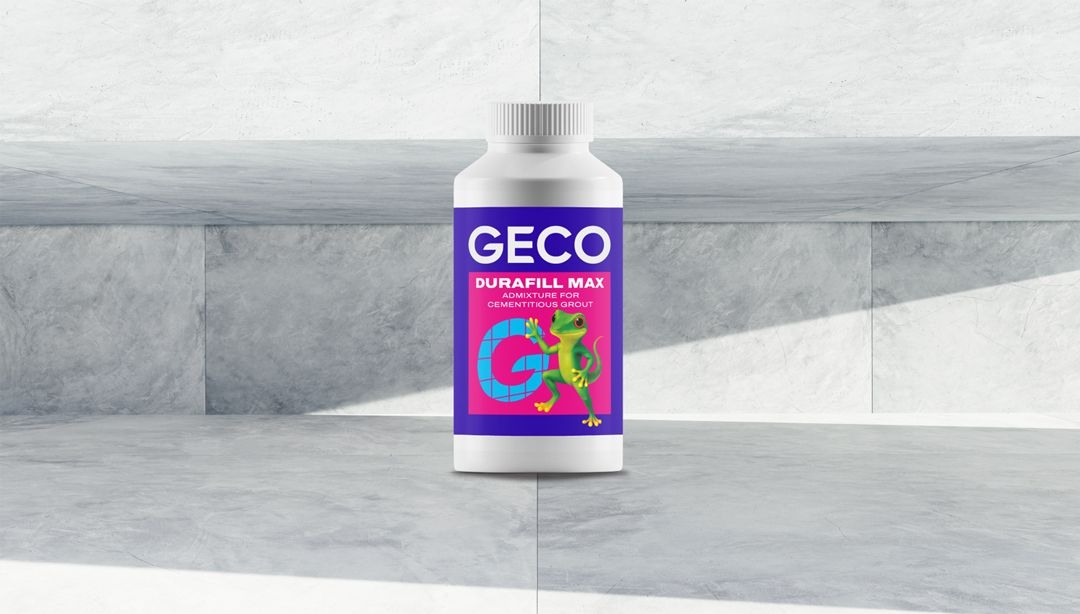
GECO DURAFILL MAX: The Best of Both Worlds – Science and Performance
The science behind grout admixtures shows how chemistry can turn basic grout into high-performance systems. GECO DURAFILL MAX is a great example of this kind of engineering. This high-performance liquid admixture uses the same ideas we've talked about in this article—making polymer films, making molecular bonds stronger, and making hydrophobic barriers—to make every important performance characteristic better.
GECO DURAFILL MAX makes tile installations stronger, more flexible, and more resistant to water. Its ability to make application easier and improve colour consistency shows that performance improvements don't have to come at the expense of workability or looks.