Why Silicone Sealant Is Non-Negotiable for These Critical Applications
28 February 2026Not all sealants are good at keeping structures secure from the elements and making sure they stay sturdy over time. There are various types of sealants available for construction, but silicone sealant is the ideal choice for a few crucial jobs when failure is not an option.
Unlike acrylic or polyurethane, silicone remains flexible even when it's really hot or cold. It doesn't break or shrink over time, and it stays flexible forever. This unique combination of traits makes it impossible to replace in situations where movement, weathering, and long-term performance are particularly crucial. Silicone sealant can bond with a multitude of surfaces, like glass, metal, ceramic, and many types of plastic. Not only does it perform better than most other solutions, but it can keep things dry for decades, not just years.
Glass Installations: Clear, Safe, and Weatherproof
In structural glazing systems, the sealant is what keeps the facade up instead of the frames that are generally used. It has to be able to hold up the weight of the glass, absorb heat, movement, stand up to wind pressure, and preserve a weatherproof seal, even on towering buildings. Also, neutral-cure silicones don't create acidic byproducts that could damage coatings or corrode metal. This keeps each glass panel from shattering or bending when it moves on its own. Silicone also keeps glass facades looking good and working well over time. It doesn't change colour because it is UV stable and clear. This maintains the vision glass areas looking clean. More importantly, it keeps the insulated glass units' essential edge seals in good shape. These seals are needed to keep water out and maintain the structure's thermal efficiency high. This means that the building's outside will stay working well for many years.
Window and Door Frame Sealing: The First Line of Defence
Windows and doors are apertures in the building's outer layer that are designed for specific functions. The seals around their frames are particularly crucial for how well they work. The perimeter joint needs to stay flexible and waterproof since the weather, thermal expansion, and movement of the building can get to these parts. Silicone sealant is the best choice here because it makes a strong, flexible barrier that keeps air and water out and lets frames move freely without placing stress on the joint.
The sealant that goes between a door or window frame and the wall around it needs to be able to stick to different types of materials and bend without breaking. Silicone bond with different substrates such as wood, stone, concrete, and aluminium, which makes it a good solution to fill in these gaps. Even when the building moves, silicone remains impermeable to air and water. This stops mould, rot, rust, and energy loss from developing, which preserves the building and makes the rooms inside safer.
Sanitary Ware Joints: How to Keep It Clean, Water-Resistant, and Long-Lasting
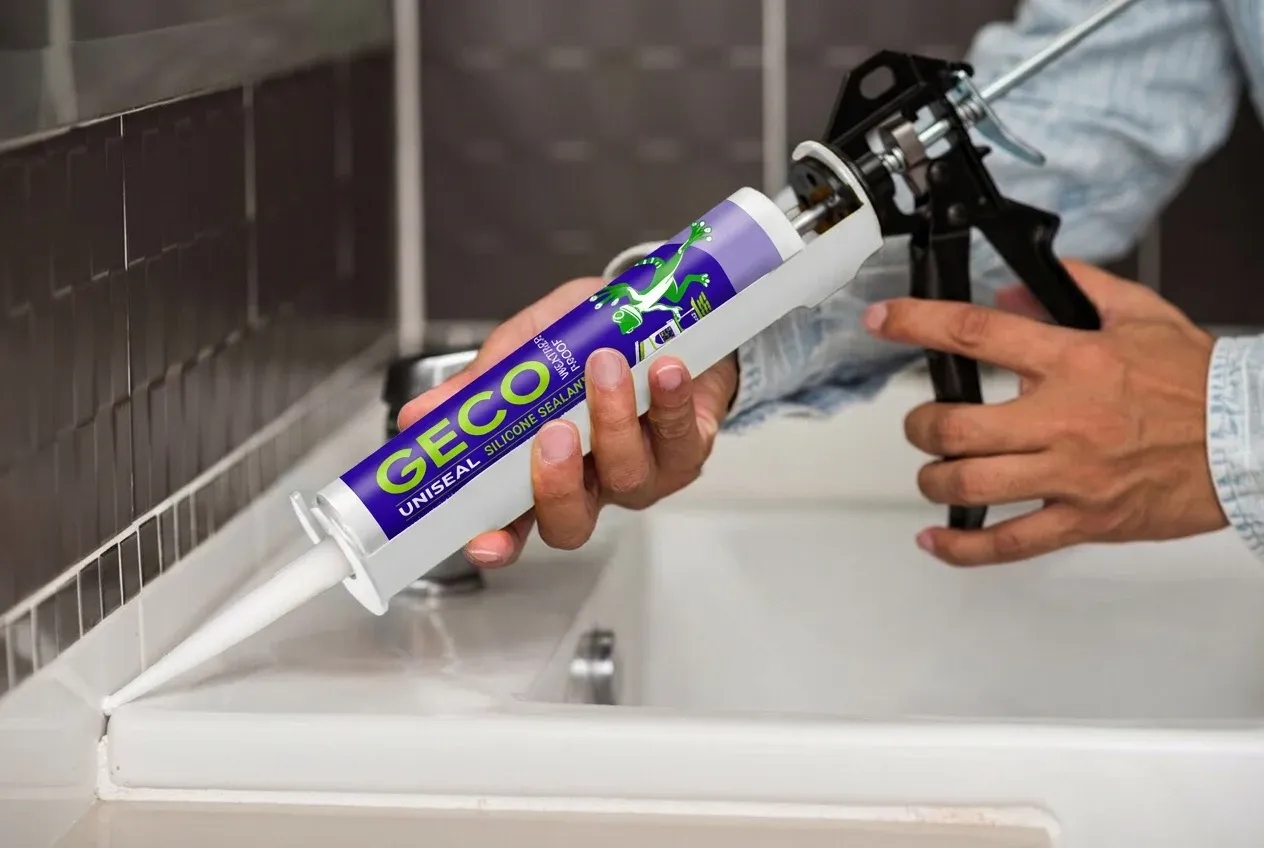
Silicone sealant is the best for use in kitchens and bathrooms since it can handle being near water, heat, cleaning agents, and movement all the time, which normal sealants can't do. It form a flexible, watertight barrier around bathtubs, showers, sinks, and countertops that stays in place even when the fixtures move or shrink while they are in use. Silicones that are safe for use in bathrooms also have fungicides that stop mould and mildew from forming.
This maintains areas clean and healthy and eliminates concealed moisture damage that could lead to rot & mould growth, and unsafe environment. Silicone is equally as important around sinks and faucets and where counters and backsplashes meet. Silicone is chemically resistant and flexible over time, so it keeps water out of cabinets, which protects items and stops hidden moisture problems. Silicone keeps high-use wet surfaces clean, lasts a long time, and works effectively, whether they are in households or busy commercial kitchens.
How Silicone Sealant Protects Buildings
Silicone sealant makes the whole building space stronger when it is utilised appropriately all over a structure. This makes the building safe, waterproof, and last for many years. It keeps water where it should be in kitchens and bathrooms, stops leaks around doors and windows, and keeps wind-driven rain from pouring in through the walls. Silicone protects against corrosion, decay, mould, and other sorts of degradation that can shorten the life of a structure and make it less safe by keeping moisture from reaching structural sections.
Its airtight seals also help keep the air within healthier and avoids energy loss by stopping air that is hotter from entering into the walls and ceilings. Well-sealed connections keep the insulation working as it should and stop air from moving through it in systems that need it all the time.
Trust GECO UNISEAL For Important Sealing Jobs
When it comes to satisfying the high performance criteria needed for glass installations, window frames, sanitary assembly, and expansion joints, GECO UNISEAL stands out. It cures into a waterproof and flexible elastomeric seal when it comes into touch with moisture in the air. This seal meets the rigorous criteria of modern construction. GECO UNISEAL can withstand ageing, weathering, and heat cycling without becoming hard, shrinking, or breaking. This means that the critical seals that make your building secure now will keep performing just as well and flexibly for years and decades to come.